
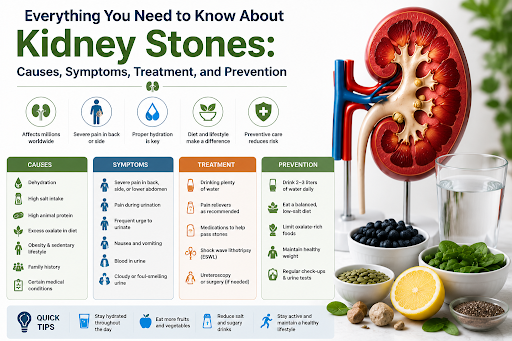
Kidney stones are one of the most common and seriously painful kidney-related problems, and they can show up in people of all ages. If you learn about kidney stone treatment, plus what leads to stones in the first place, and how you might spot them early, you can feel a bit more in control, with less stress in the background
In this guide, we will walk through the basics of kidney stones treatment from start to finish, like what causes them, the early warning signs, possible treatment options, and ways to lower your chances moving forward.
What Are Kidney Stones?
Kidney stones are hard mineral and salt deposits that end up forming inside the kidneys. They can be really different sizes, like from something as tiny as a grain of sand, to even a chunk as big as a golf ball. Often, the smaller stones just pass through on their own. But if they are larger, sometimes they need medical help or treatment.
Common Kidney Stone Causes
Understanding kidney stone causes is the first step toward prevention. Some of the most common contributing factors include:
- Not drinking enough water, which lets minerals become more concentrated in the urine.
- A diet high in sodium can make calcium levels in your urine rise.
- A diet high in sodium can make calcium levels in your urine rise.
- Family history matters because some folks seem more genetically predisposed to stone formation.
- Certain medical conditions, like obesity, digestive disorders, and urinary tract infections, sometimes.
In many cases, kidney stones symptoms develop from a combination of these factors rather than a single cause.
Recognizing Kidney Stones Symptoms
Trying to spot kidney stones symptoms early is one way to help yourself get treatment sooner. A few common signs to watch for are, for example, the following:
- You might get this sharp, really intense ache in your back or on the side, like down there under the ribs.
- Pain that slowly spreads out into the lower abdomen, or sometimes the groin.
- Blood in the urine, which may appear pink, red, or brown
- Cloudy or foul-smelling urine
- You might feel a rather frequent urge to pee, plus some noticeable pain when you’re urinating.
- You might feel a rather frequent urge to pee, plus some noticeable pain when you’re urinating.
If you suddenly feel intense pain, along with a fever or some chills, it is best to reach out for medical help right away. Like, it could be an infection in there, not just the stone.
Kidney Stones Treatment Options
Treatment generally turns on stone size and where it’s sitting, plus how much discomfort it’s causing you. Most of the time, people use approaches like these, kind of depending on the circumstances:
- Increased fluid intake – For smaller stones, drinking plenty of water can help them pass naturally.
- Pain management – Prescribed by a doctor to help manage discomfort while a stone passes.
- Medication – Certain medications can help relax the urinary tract, making it easier for stones to pass.
- Shock wave therapy – A non-invasive procedure that breaks larger stones into smaller pieces.
- Surgical removal – Reserved for larger stones or cases where other treatments have not worked.
Your doctor might usually recommend an imaging test to find out which care route is the most suitable, depending on how large the stone is.
Preventing Future Kidney Stones
Once you have experienced a kidney stone, the risk of developing another increases. Reducing that risk often involves:
- Staying consistently hydrated throughout the day
- Reducing sodium and animal protein intake
- Getting calcium from food sources rather than avoiding it
- Limiting oxalate-rich foods if you are prone to certain stone types
- Considering kidney-focused nutritional support to help maintain balanced urine composition
Conclusion
Getting a handle on kidney stones from pretty much every angle, including their causes, signs, and the treatment options that actually exist, puts you in a much stronger spot to manage them and prevent future episodes. When you spot kidney stone symptoms early, and you also understand the usual kidney stone causes, you can move ahead proactively and aim for better overall kidney health.
At Healthy Kidney Inc., we’re here to back you up with real-world guidance, plus kidney-focused resources, step by step. Take a look through our articles and supplement options to help safeguard your kidney health in the long run.


